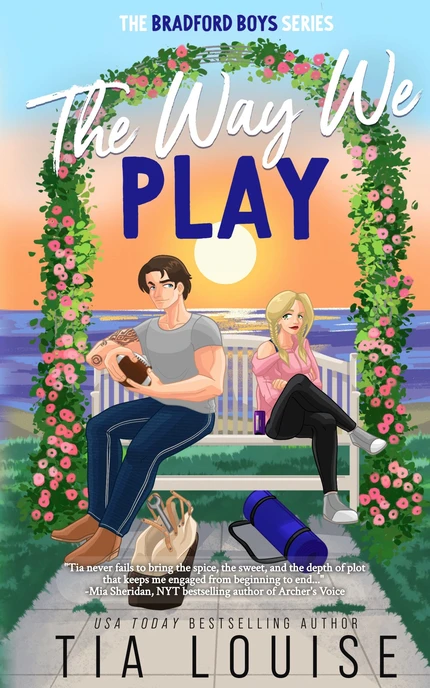
The Way We Play (The Bradford Boys #2), by Tia Louise
My rating: 1 of 5 stars
“The Way We Play” is a miserable reading experience, not because its tropes are inherently objectionable, but because they replace characterisation, logic, and genuine chemistry. The premise has workable ingredients: a cautious thirty-year-old caring for her younger brother, and an injured former kicker with a repairman’s trade. Yet the novel turns every element into a contrivance designed to prove that Rachel and Zane are destined for each other.
The book practically announces this problem itself:
»Zane Bradford appeared at the perfect time.«
That is not foreshadowing. It is the author waving a large sign labelled “plot convenience”.
Nothing feels credible. Rachel’s responsibilities exist mainly to make Zane indispensable, while Zane alternates between wounded alpha hero, miraculous rescuer, and muscular plot device. Their supposed conflict never develops into convincing friction. They announce attraction, trauma, and eternal devotion at one another, and the narration treats these declarations as emotional depth.
The novel’s idea of romance is similarly reduced to destiny clichés:
»Life always seems to put people together in the way they’re supposed to fit.«
That is the sort of sentence that would be harmless in a greeting card, but here it substitutes for any convincing explanation of why these two people belong together.
The prose is even worse. It repeatedly swells into overwrought melodrama, sounding like emotional wish-fulfilment written by someone who has confused desperation with profundity.
»Rachel’s green eyes shine like the sun rising over the meadow when we take the horses out on a dewy spring morning.«
This is not passionate or poetic. It is embarrassingly excessive, turning what should be an intimate moment into theatrical self-parody.
The relationship then leaps straight from attraction to supposedly permanent emotional salvation:
»Already she feels like home. I could be here forever and die a happy man.«
Compared with stronger grumpy-sunshine sports romances, “The Way We Play” has no patience for gradual trust, believable personal change, or dialogue that sounds as if actual adults are speaking. It simply piles on virginity, protectiveness, chronic pain, family burdens, instant recognition, and supposedly irresistible attraction.
The possessiveness is presented with equal solemnity:
»She’s always been mine. We only had to find each other.«
This is not earned devotion. It is an assertion masquerading as a relationship.
This is the only Tia Louise novel in my reading record, so I cannot judge whether it represents her usual work. On this evidence, however, I have no desire to investigate further. “The Way We Play” is dull, implausible, emotionally overinflated, and populated by characters who seem to exist solely to fulfil romance conventions.
One star out of five.
Ceterum censeo Putin esse delendam
View all my reviews
https://turing.mailstation.de/the-way-we-play-the-bradford-boys-2-by-tia-louise/?fsp_sid=2657


Comments
Post a Comment